Having an e-commerce business with a high-converting website today is a must in this digital world for any online venture. To help your online business thrive in e-commerce, we are here to present eight powerful tips that help transform your site into a conversation machine. Tips here are on user experience, design, and functionality so that your site does attract visitors but also converts them into loyal customers.
1. Streamlined Navigation and User Experience
One of the most important aspects of ecommerce is having a website that’s well-organized and intuitive about navigation. With a website in this state, users can quickly and efficiently find what they are looking for and avoid confusion. Clear categories, drop-down menus, and a robust search bar could mean all the difference in the user experience and prevent bouncing for those using your site.
For instance, ecommerce giants, such as Amazon, ensure that their sites are clean and intuitive to layout so that searching for products is effortless. Therefore, products stay in a meaningful flow to ensure visitors can easily locate what they want. This, in turn, maximizes the possibility of conversion.
2. Mobile Responsiveness is the Key
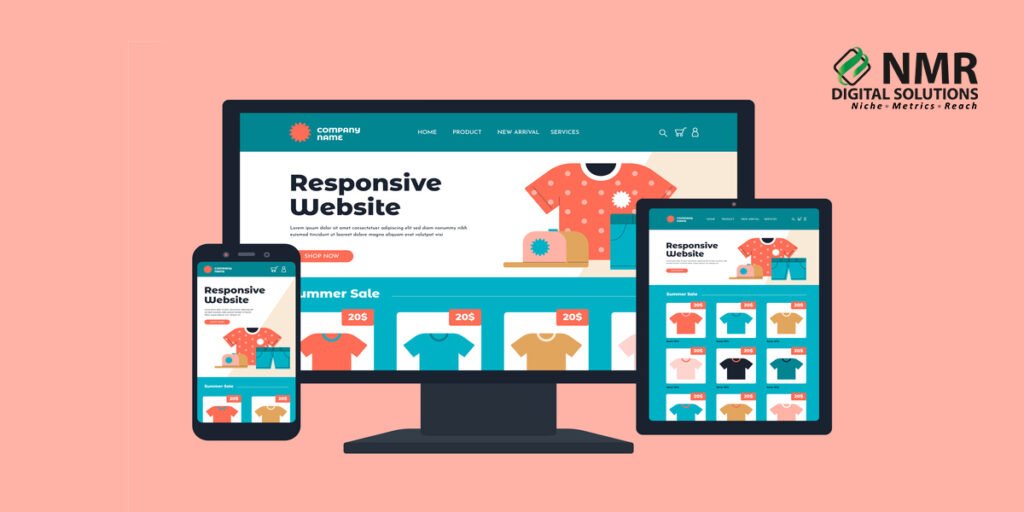
With mobile commerce currently growing exponentially, it is no longer a question of negotiability to ensure your ecommerce website is mobile-friendly. Currently, more than 50% of users shop using their mobiles, and a website that does not provide a smooth mobile experience risks losing very significant sales.
The responsive design transforms your website such that it is responsive in perfecting diverse screen sizes from the homepage to the checkout. Test of mobile performance and loads for its full speed ensures that this smooth shopping experience is provided by your audience.
3. Great Product Images and Description
When shopping online, the customer can’t physically feel the product. So, good photos and detailed descriptions become very important. Take multiple pictures of a product shot from different angles, allow zoom-in, and ideally provide videos of the product as well.
Equally important are the product descriptions, which should be informative and optimized with relevant keywords like “ecommerce product” and “best ecommerce platform.” Also, make sure that you remind people of the benefits of your products, their usability, and your unique selling points so that visitors can decide on purchasing for themselves.

4. Fast Loading Time
Consumer mentality is such that they always want faster and quicker things to happen. Today, with the digital age, consumers are also getting very impatient. Another major reason for leaving carts behind is slow-loading websites. It has been found through a study that if a website takes more than three seconds to load, then visitors do not seem to wait for it to load completely.
Optimize load times through compression of images, utilizing content delivery networks, and limiting the proportion of large heavy elements. Fast loading of an ecommerce web site leads to a good shopping experience that will eventually result in increased customer satisfaction and conversion rates.
5. Social Proof and Trust Signals
Ecommerce is the world; trust should be everything. Therefore, social proof within it includes customer reviews, ratings, and testimonials. This will assuredly guarantee the quality of your products to the potential buyer and badges like “SSL Certified” or “Secure Payment” will increase confidence.
E-commerce examples such as Zappos and Best Buy focus on reviews and ratings which help reassure other people that they have purchased and enjoyed the products.
6. Streamline and Secure Checkout Process
The checkout is the place where the visitor becomes a customer. However, long and complicated checkout processes tend to make one abandon the cart. Make the process shorter and easier to convert. Introduce the guest checkout and reduce the number of fields a customer has to fill as well.
Security is also an issue at checkout. Ensure your site is SSL encrypted and display trust badges prominently on the checkout pages so that customers are assured of security. The more comfortable customers are with sharing their personal information, the better the chances of completion of purchases.
7. Personalized Shopping Experience
However, this might be an excellent opportunity to enhance the user experience and increase the conversion rate. The right product suggestion, a nice discount, or a personalized message can be indeed created if using the data of the customer purchases or their browsing history.
Ecommerce and digital marketing strategies may be combined to offer relevant and personalized experiences to your customers. As is witnessed by studies, content personalization encourages more engagement and results in good sales.

8. A/B Testing and Continuous Improvement
A well-designed ecommerce website is never really complete. Continuous refinement through A/B testing guarantees that your site keeps up with current times and remains competitive and effective. You can test product description, the call-to-action (CTA) button, and page layout arrangements to see what works best for your target audience.
For example, you test different iterations of your checkout page and decide that the minimization of form fields makes it more conversion-friendly. This, among other changes, results in building an ecommerce site that performs time after time.
Creating a highly converting ecommerce website is all about hard work, care for the user’s experience, and constant optimizing; through these eight tried strategies, ranging from navigation to A/B testing, you can develop an ecommerce website that doesn’t just attract visits but converts visitors into loyal customers.
Whether it is a new e-commerce business or an old established online store, constant improvement is the key to guiding you to ensuring long-term success by staying in front of the competition. Using these tactics will place your ecommerce business well on its way to gaining growth and profitability.
Keywords: ecommerce marketing, e commerce business, ecommerce website, e commerce companies, best ecommerce platform, develop ecommerce website, selling ecommerce business, ecommerce product, ecommerce storefront, ecommerce and digital marketing, e commerce introduction